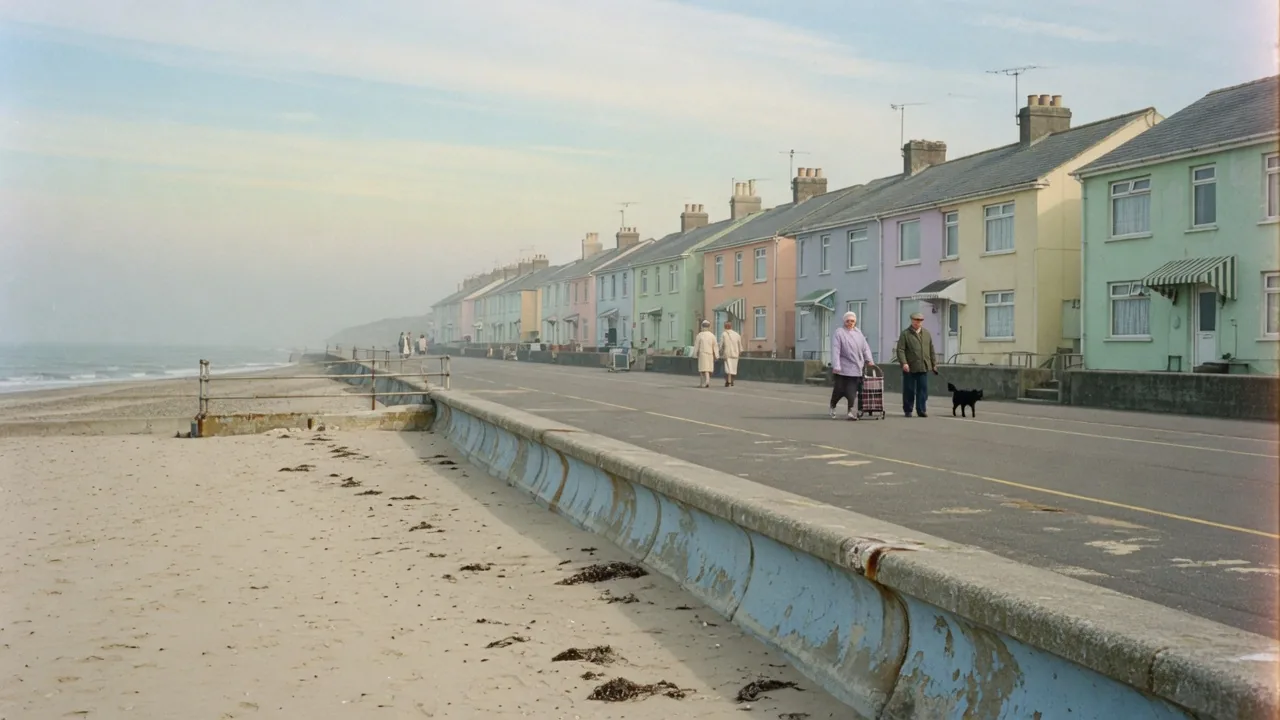
Llandudno is a Victorian resort that still runs on a Victorian calendar. The North Shore fills when England and the north-west have a holiday. The West Shore and the Great Orme do not fill in the same way, or on the same days. A week at Easter and a week in late September can look like two different towns, a twenty-minute walk apart.
Festival dates move. Use Visit Conwy and the Venue Cymru diary for those. This page is about pressure, light, and which shore to stand on.
Come in May or September if you want the tram running, a table, and a bench on the promenade. Come in June for the long evening on the Orme. Come at Easter and in August only on purpose — the North Shore will be doing what it was built to do, which is hold a great many people. Come in winter for the empty crescent and a walk that costs nothing. Pack a waterproof in every month.
Easter is the first week the town remembers what it is. Hotels that ran on a skeleton through February fill. The Punch and Judy, the donkeys and the pier kiosks reappear as the weather allows. The Parade fills before lunch. It is not August, but it is not shoulder season either, and a fine Easter Sunday on the North Shore is a crowd.
The tramway and the cable car aim to be running by late March. That is an operator timetable, not a promise — check before you build a day around the first car. The Orme itself does not close.
If your dates are Easter because the children are off, treat the North Shore as the afternoon and the West Shore or a walk on the Orme as the morning, before the day visitors arrive.
This is the botanical season, and the reason a May visit is the one the headland would choose. The limestone grassland comes into flower. Seabirds are back on the northern cliffs. The air is still sharp on the summit when the promenade is in shirtsleeves.
The town is open. Cafés have their hours back. You can park after nine on a midweek morning without a fight, which will not be true in August. The Great Orme guide is the walking document; this page is only saying that May is when that walk is at its best and the town is not yet at capacity.
Late May carries a half-term and, in most years, the Victorian Extravaganza over a bank holiday — costumed parades and a street fair in the centre. It is when Llandudno looks most like itself, and when you should have a bed before you set off. Confirm the weekend on the local listings rather than on a date copied from last year.
August is the point of a Victorian resort. Families, coaches, day-trippers from Manchester and Liverpool, and everyone who thinks the British seaside is a summer destination arrive together and walk the same two kilometres of promenade. The pier is the thing they walk to. The hotels are full. The Parade is a crawl. A table at seven needs a booking.
None of that makes August a bad month — the seafront was designed for it. Get up early, walk the promenade at eight, and put the Orme or West Shore in the middle of the day.
This is the fact that makes Llandudno more usable than its August reputation. The town has a second seafront and a country park attached, and neither of them takes the same crowd as the pier.
West Shore faces the other way — Conwy Bay, Anglesey, the sunset — and stays the quieter beach even in the school holidays. Sand at low tide, dunes at the southern end, no pier, no Punch and Judy. People who have worked it out go there on the same afternoon the North Shore is a procession.
The Great Orme absorbs the rest. The summit complex and the tram get busy. Marine Drive and the northern slope to St Tudno’s Church do not, not in the same numbers. A circuit of the headland on a Saturday in August is still a walk with weather and goats in it, not a pavement in town.
Use them. The mistake is to spend four August days on the North Shore because that is the picture on the brochure. The walks guide and the West Shore piece are the practical alternatives.
This is the month to pick if you can move a date.
School has gone back. The tram and the cable car are still running, in a normal year, into October. The light goes low and gold along the hotel crescent. West Shore starts to feel like the whole point. You can park. You can get a table. The Orme has the first of the autumn in it without the winter shutting the mechanical ways up.
Days shorten. By the end of the month you want to be off the top of the Orme with a margin of daylight, and the cable car will already be taking the wind seriously. Waterproofs stay in the bag. The crowds do not.
October half-term is a spike, not an August. The town fills for a week and empties again. The tram and cable car are near the end of their season; do not assume a half-term Thursday in late October has the same service as a Thursday in July. Check.
On the Orme the Kashmiri goats rut. They come down the hillside and, in a bad week, into the streets of the upper town. Admire them from a distance. At Angel Bay on the Little Orme, grey seals pup on the shingle. That is a different outing, and it is one of the reasons to come in autumn rather than to stay away.
Winter is when the North Shore earns the rest of the year. The kiosks shut. The Punch and Judy goes away. The tram and the cable car stop — late October is the usual end, with a late-March start, but that is the operator’s year, not yours. What remains is the thing the Mostyn estate actually built: two kilometres of promenade, the pier to walk, hotels lit along the crescent, and, on a clear frost, the Orme white above the town.
It is the best walking season on the North Shore crescent and the worst for daylight and tram hours. Marine Drive and the footpaths stay open. The summit café may be the only thing working at the top. A bright January morning on Llandudno Pier, with no one on it, is the visit a lot of North Shore August people think they had.
Christmas to New Year is the winter version of an Easter-scale spike: fewer kiosks, fuller car parks, the North Shore busy at lunchtime. A midweek in February is not.
North Wales is wet. Snowdonia is the first high ground the Atlantic meets, which is why Llandudno, on a peninsula north of the range, is often the drier of the two forecasts. It is also why a week here without a wet day is luck, not planning.
The town was built for it. Mostyn Street has continuous glass canopies. The pier has an arcade. The Bronze Age mines are underground. Venue Cymru exists. The rain guide is not a consolation page. It is a normal Llandudno page, and it applies in July as much as in November.
The Orme in low cloud is a waste of a summit ticket. Marine Drive in a gale is more interesting than the same road in sunshine. Choose accordingly.
There is almost no free parking in the centre, and the Parade along the North Shore is the first place to fill. Easter, the late-May week, August and the October half-term are when that becomes the morning. A wet day funnels everyone into the town parks, which fill faster in rain, not slower.
West Shore and Dale Road take the overflow that people who only look at the hotel crescent never find. The summit car park is for the Orme. The parking guide is the operational document. This page is only saying: the month you visit decides whether that document is a two-minute decision or the whole of breakfast.
May for the Orme in flower and a town that still has room. June for the evenings. September for the year in miniature — tram running, light on the crescent, West Shore to yourself at tea-time. January for the promenade and the pier, if you can live without the cable car.
Easter and August on purpose, with a West Shore afternoon in the plan and a bed already paid for. Half-terms as small versions of the same, not as quiet windows.
Llandudno does not close. The North Shore gets full, the weather comes in, or both. The West Shore and the Orme are why that is survivable. Pick the month that matches the trip you actually want, not the month the rest of the north-west is also free.