Llandudno Pier
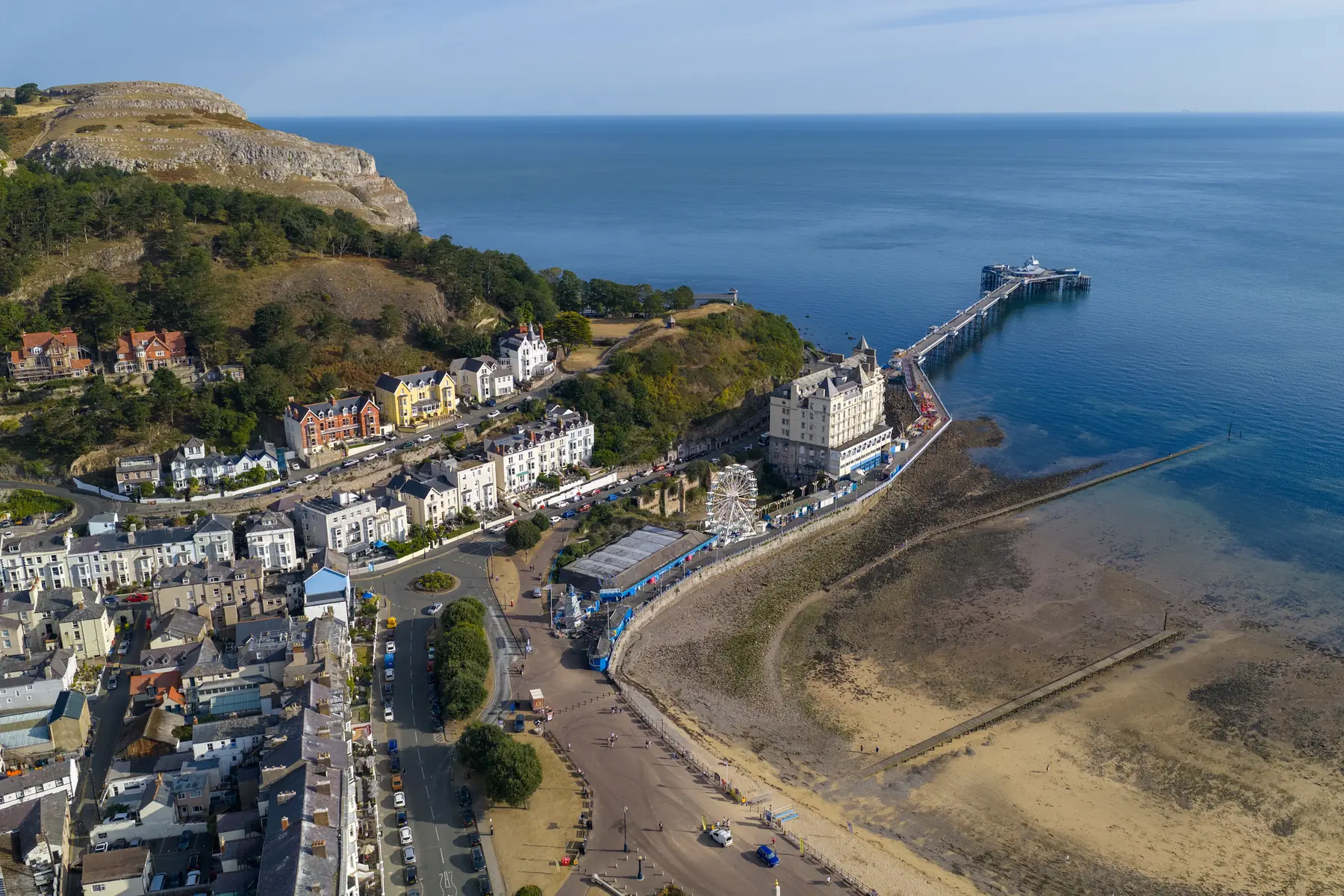
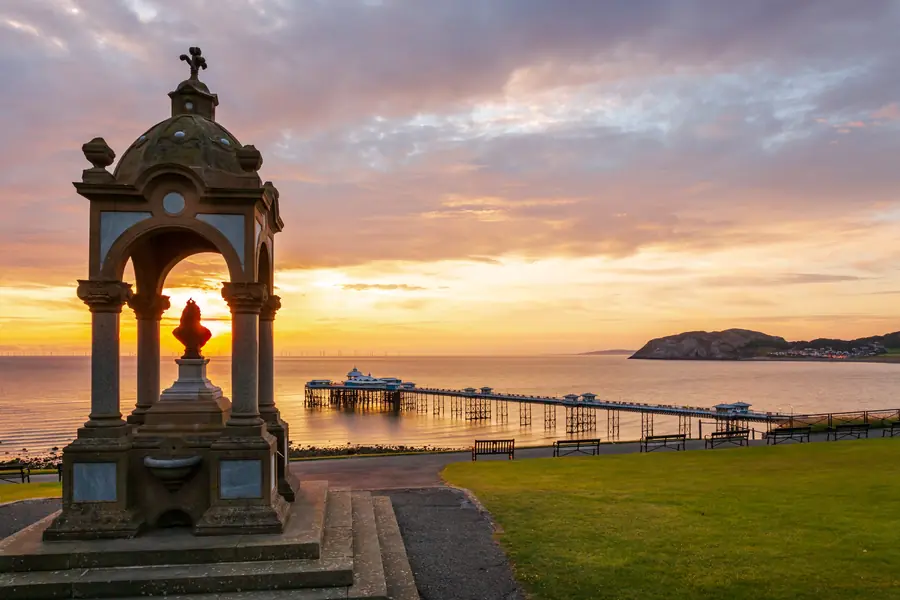
Llandudno Pier is a Grade II* listed pier in the seaside resort of Llandudno, North Wales.
Llandudno Pier, Conwy Castle and more: the attractions, the days out and how to plan your visit.
Llandudno is a Victorian-era seaside resort on the Creuddyn peninsula, which pushes into the Irish Sea on the north coast of Wales. The name means “Church of Saint Tudno”; the community, which takes in Penrhyn Bay, Penrhynside and Bryn Pydew, had a population of 19,700 at the 2021 census, and it is North Wales’s largest seaside resort. The town is flat, and the walking circuit of the main sights is about 3.5 km, but the things most people come for sit on a limestone headland above it. A visit divides into the level part and the climb, and the climb is where the difficulties are.
The town lies between two carboniferous headlands — the Great Orme to the north-west, the Little Orme east of Llandudno Bay — with the Irish Sea on one side and the Conwy estuary on the other. That gives Llandudno two waterfronts, and they are not interchangeable.
The North Shore is the resort. The promenade curves along the bay from the pier to the paddling pool at its eastern end, lined with the large hotels, the Punch and Judy and the land trains. Llandudno Pier is Grade II* listed, 2,295 feet (700 m) long, the longest in Wales and the fifth longest in England and Wales, and holds 4.5 from 25,810 Google reviews. Reviewers add what the listings leave out: no public toilets along the promenade, and gulls that swoop for food.
Behind the front the town is a Victorian grid: Mostyn Street is the shopping run, the Alice in Wonderland town trail starts at the Town Hall on Lloyd Street, and the station is on Augusta Street, 0.3 km from the centre. The West Shore, across the neck of the peninsula, faces the estuary and Conwy Mountain and is the quiet one: a visitor in August 2025 called it “a long stretch of beach with dunes and pebbles” with “no promenade or hotels or places to visit”.
The Great Orme is a limestone headland whose English name comes from the Old Norse for sea serpent. It is a country park at 4.7 from 8,077 reviews, carrying St Tudno’s Church, the Iron Age hillfort at Pen-y-Dinas and Bronze Age copper mines.
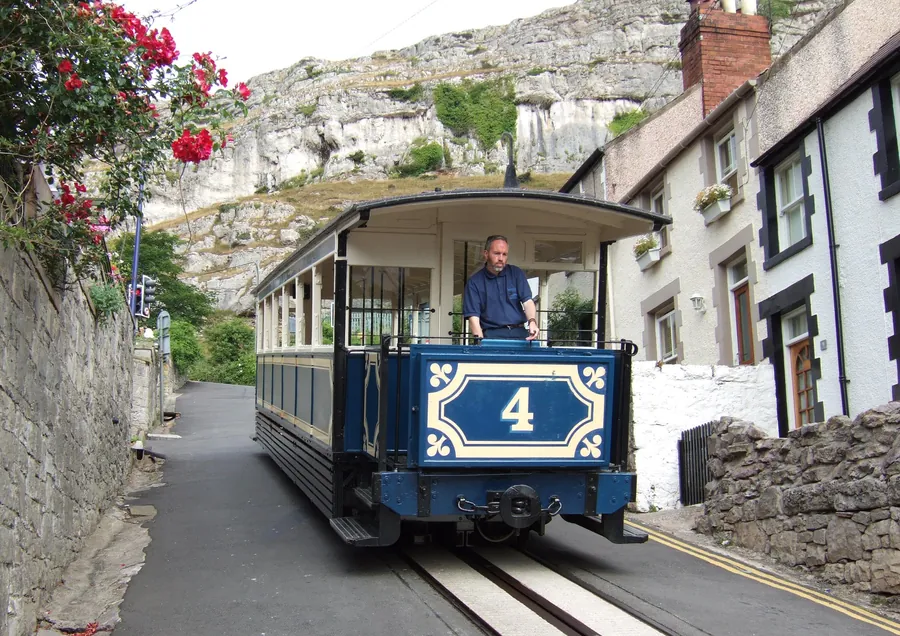
Four ways up. The Great Orme Tramway is cable-hauled, 3 ft 6 in gauge and seasonal from late March to late October, carrying over 200,000 passengers a year from Victoria Station to just below the summit. The cable car covers one mile forty feet (1.622 km) from Happy Valley and opened in summer 1969. Marine Drive can be walked, cycled or driven round to a summit car park, and three waymarked trails climb on foot. Two warnings recur: tramway and cable car both take cash only — a visitor in July 2026 found that “it’s not clear until you’re almost at the ticket office that it’s cash only” — and the cable car is weather-dependent, a visitor in August 2025 reporting cars loaded two at a time under “a sign saying this was due to high winds/crosswinds”.
Of the seventy reviews sampled across the pier, the promenade, West Shore Beach, the tramway, the cable car, the country park and the copper mines, fifteen mention queues, waiting, crowding or parking — almost all of them about the two mechanical ways up the Orme. A visitor to the tramway in August 2026 “queued for an hour before boarding”; one in July 2026 found “it was quite busy and there was a 30 or so minute wait”. The cable car fares worse: a visitor in July 2026 wrote that “the cable car wasted 3 hours of my day in queues”, and another that month that you “can avoid the queue and drive up”.
The town itself shows no such pressure. None of the ten sampled pier reviews mentions crowds, and the copper mines can be quiet at peak season: a visitor in August 2026 wrote, “We visited during the summer holidays and found it to be surprisingly quiet with no queues.” Parking is the West Shore’s problem rather than the town’s: a visitor in April 2026 singled out “one significant hurdle: the parking situation”. Season is the other constraint — the tramway does not run in winter, and a visitor to the summit in November 2025 found “Nothing was open except the tiny cafe”.
The walking day published here starts from the Victoria Centre car park off Mostyn Street and runs promenade, coffee on Clonmel Street, the pier, the tramway’s Victoria Station, lunch on Old Road and the copper mines: 3.5 km, about an hour on foot spread across the day, plus roughly 25 minutes back to the car. With young children the short version is the promenade and the pier only, about 20 minutes of walking.
Half a day buys the front — the pier absorbs an hour on its own, on an April 2025 account. A day covers the town plus one ascent, with the mines at “roughly 40 minutes to an hour” by a September 2025 review. Two nights is what the area rather than the town asks for. Not everyone finds the seafront more than a walk: a June 2026 review of the promenade, three stars, said, “It’s a nice walk, but that’s it.”
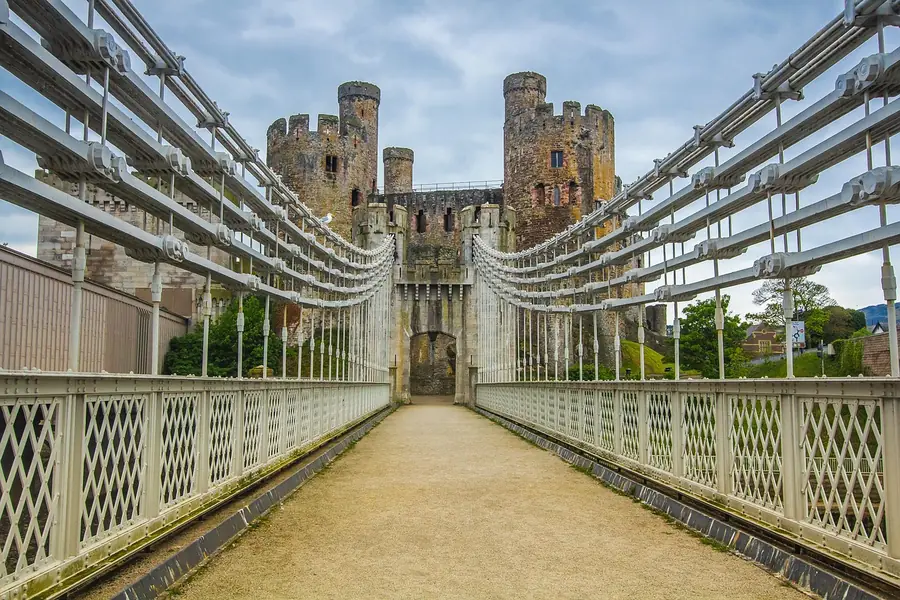
Distances are straight-line from the centre. Conwy, 4.9 km, is the serious day out: a walled market town on the west bank of the river, with Conwy Castle — built by Edward I between 1283 and 1287, at 4.7 from 21,835 reviews — the town walls, Plas Mawr and the Smallest House in Great Britain on the quayside. The flat cycle path from West Shore reaches it without a road.
Angel Bay at Penrhyn Bay is a seal-watching cove on the seals’ own calendar: a visitor in June 2026 wrote, “There was no seals at the beach, will come back at the correct time, between January and April.” Bodnant Garden at Tal-y-cafn holds 4.8 from 10,078 reviews and Penrhyn Castle near Bangor 4.7 from 5,242; the Welsh Mountain Zoo above Colwyn Bay is the weakest at 4.3 from 7,787, and its reviews are divided.
The Sunday railway is much thinner: the town’s station has 31 direct destinations on a weekday and 12 on a Sunday, with Chester and both Liverpool stations at none, while Llandudno Junction, 4.7 km out, keeps 32. The Conwy Valley line runs inland to Blaenau Ffestiniog; Penmaenmawr is 8.8 km along the coast and Colwyn Bay 9.5 km the other way.
The most-visited sights in and around Llandudno.
Llandudno Pier is a Grade II* listed pier in the seaside resort of Llandudno, North Wales.
Conwy Castle is a fortification in Conwy, located in North Wales. It was built by Edward I, during his conquest of Wales, between 1283 and 1287.
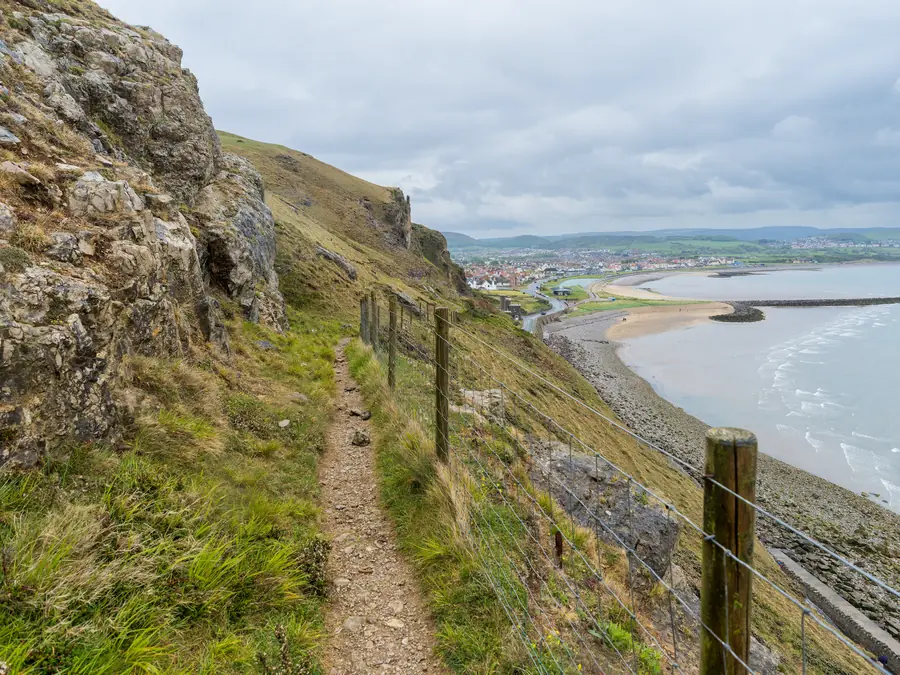
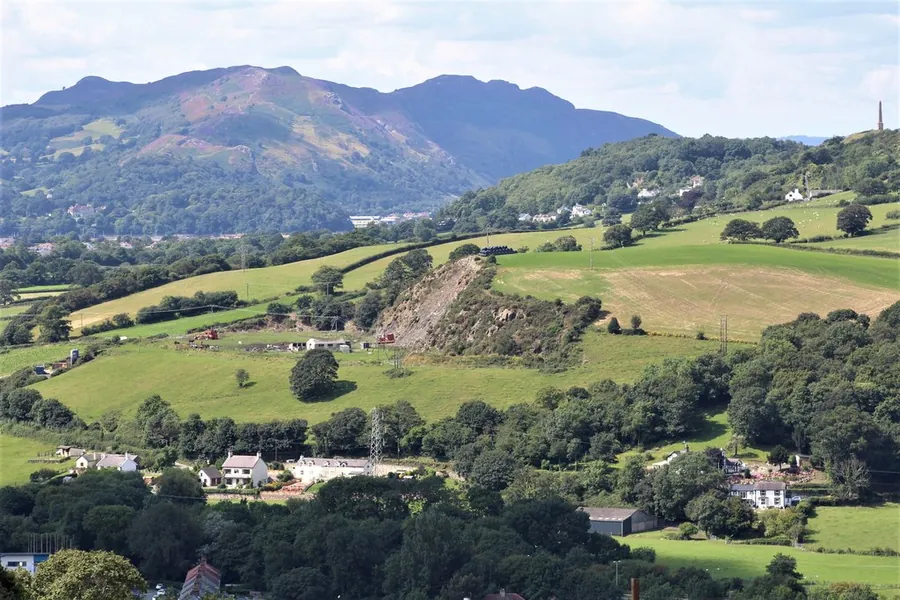
The Great Orme Tramway (Welsh: Tramffordd y Gogarth) is a cable-hauled 3 ft 6 in (1,067 mm) gauge tramway in Llandudno in north Wales.
The top sights on one map — and a sensible order to see them in.
Want live prices and dates? GetYourGuide's booking widget shows them, and sets their cookies in your browser when it loads.
The five-day forecast for Llandudno, updated through the day.
Wet days ahead? Ideas for Llandudno in the rain →
Forecast data from MET Norway (CC BY 4.0), summarised by day.
Through trains from London Euston, 6 times a day, change at Llandudno Junction Through trains from Manchester, every hour on weekdays (2½ hours). Through trains from Liverpool (approx. 2-2½ hours), change at Chester or change at Chester and Llandudno Junction (it depends on the timetable how many changes there'll be). Trains from Crewe, every hour on weekdays, change at Chester and/or Llandudno Junction. Trains…
From England: From the M6, take the M56 in the direction of Chester, North Wales. Take the M53 in the direction of A55, North Wales at the end of the M56. This becomes the A55, stay on this for 30 miles or so until you see signs for the A470 turn off. From here follow signs for Llandudno.
Nearest airports are Liverpool John Lennon Airport and Manchester Airport but only Manchester is directly linked by train (from airport by train to Manchester Piccadily, then change train). From Liverpool airport: take a bus to Liverpool Lime Street station, then take a train.
Local buses operate from Rhyl (every 12 minutes), Bangor (four per hour), Caernarfon, Llanberis and Llangollen but there are no daily long distance coach services to Llandudno. National Express has a daily service from London calling at Llandudno Junction (three miles away). There is a weekly National Express service to Newcastle upon Tyne on Sundays.
Written from what we found on the ground.
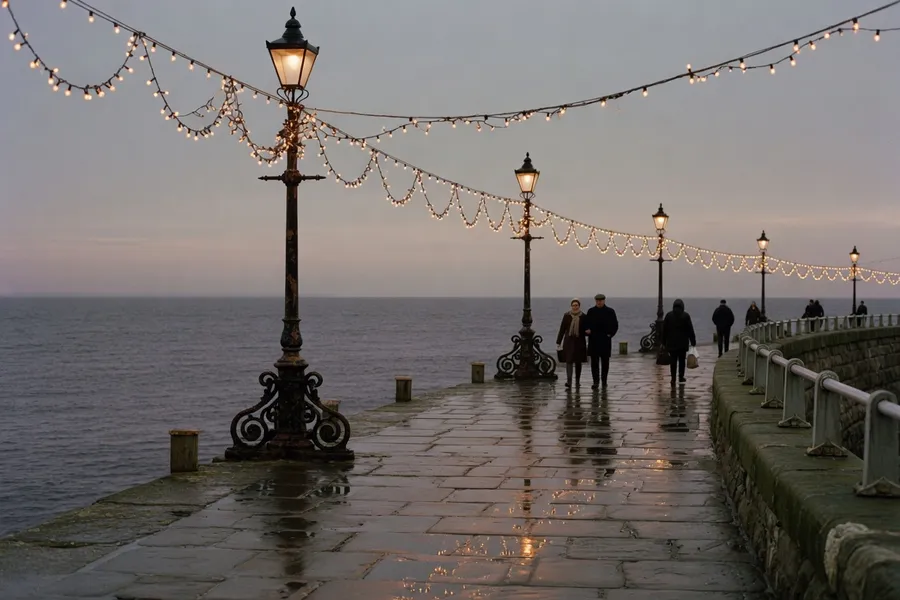 Christmas in Llandudno: Parades, Pantos and the Lights Christmas 2026 in Llandudno: the 5 December parade, Santa Dash and lights switch-on, the Boxing Day sea dip, Sleeping Beauty at Venue Cymru, the cancelled Extravaganza, and what stays open in December. Read the guide →
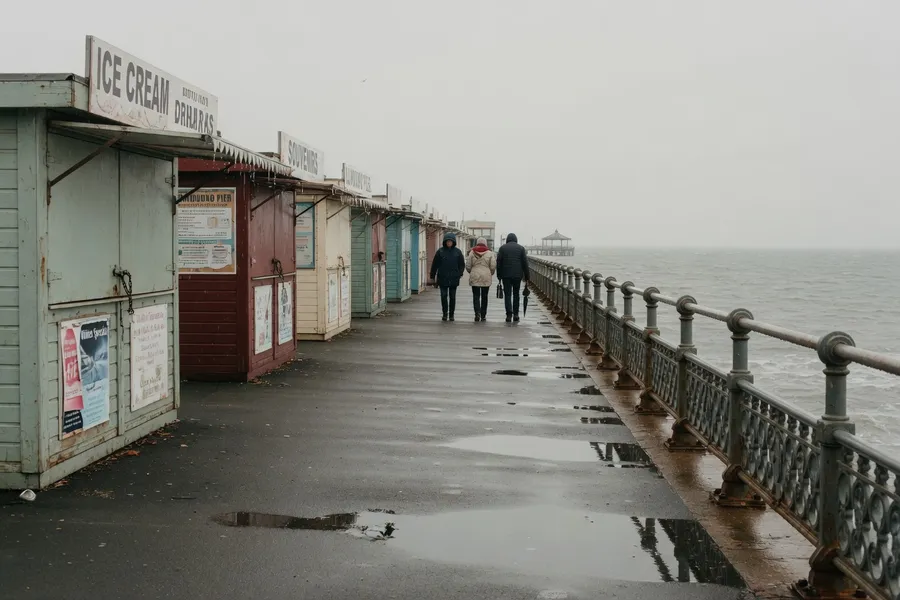 Llandudno on a budget How to do Llandudno on little money: walking the Great Orme free, the tram and cable car compared, a £7.50 all-Wales bus day ticket, cheap eats and the free and low-cost events through early winter. Read the guide →
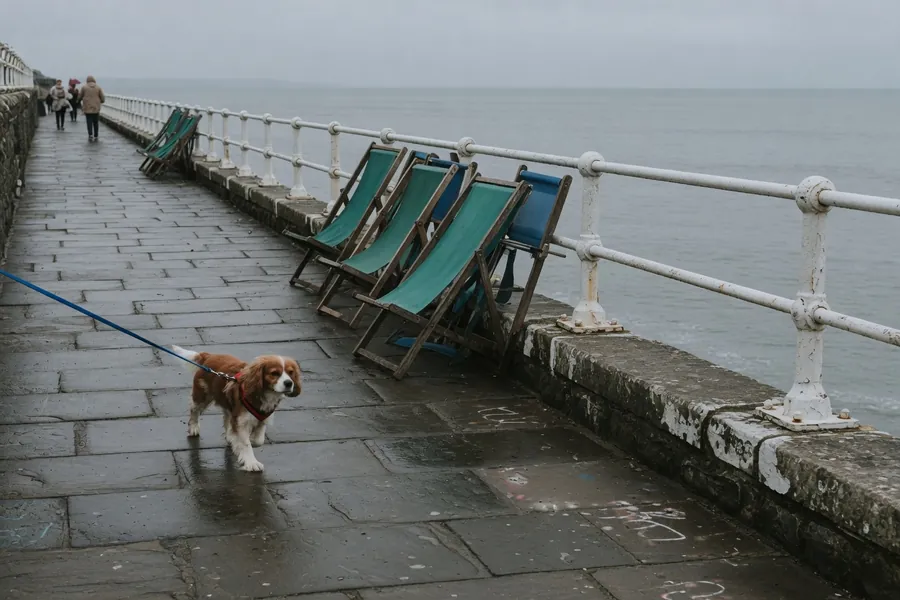 Dog-friendly Llandudno Where dogs can and cannot go in Llandudno: the exact North Shore and West Shore summer beach zones, the October-to-April freedom on both shores, the lead rules, the Orme tram and cable car, and Bodnant Garden. Read the guide →
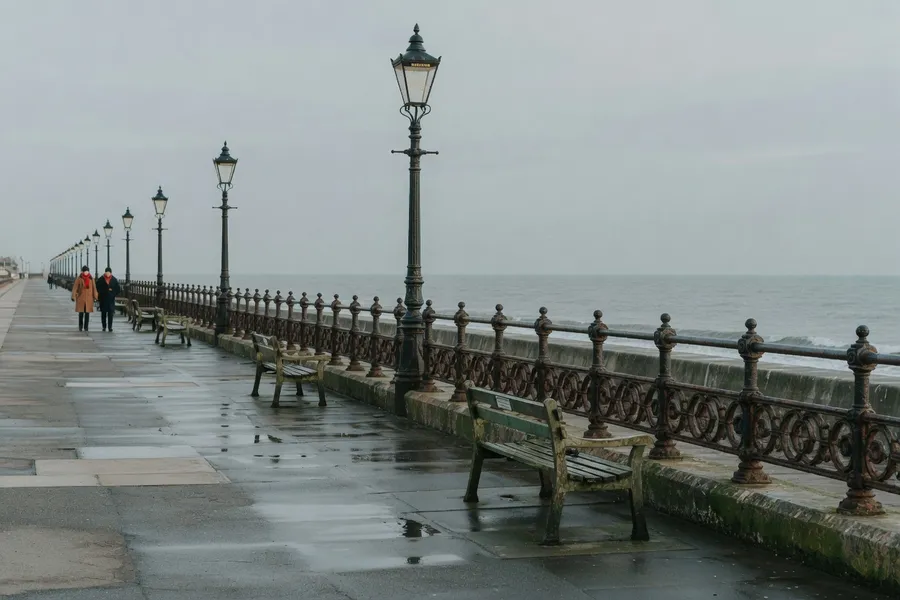 Llandudno in winter Llandudno out of season: the Great Orme Tramway's winter closure, what stays open through the quiet months, the promenade and the Orme in low winter light, and the Christmas weeks from the town parade to the Venue Cymru pantomime. Read the guide →
Guides, ideas and planning help for your visit, from the editors.
Read the guides