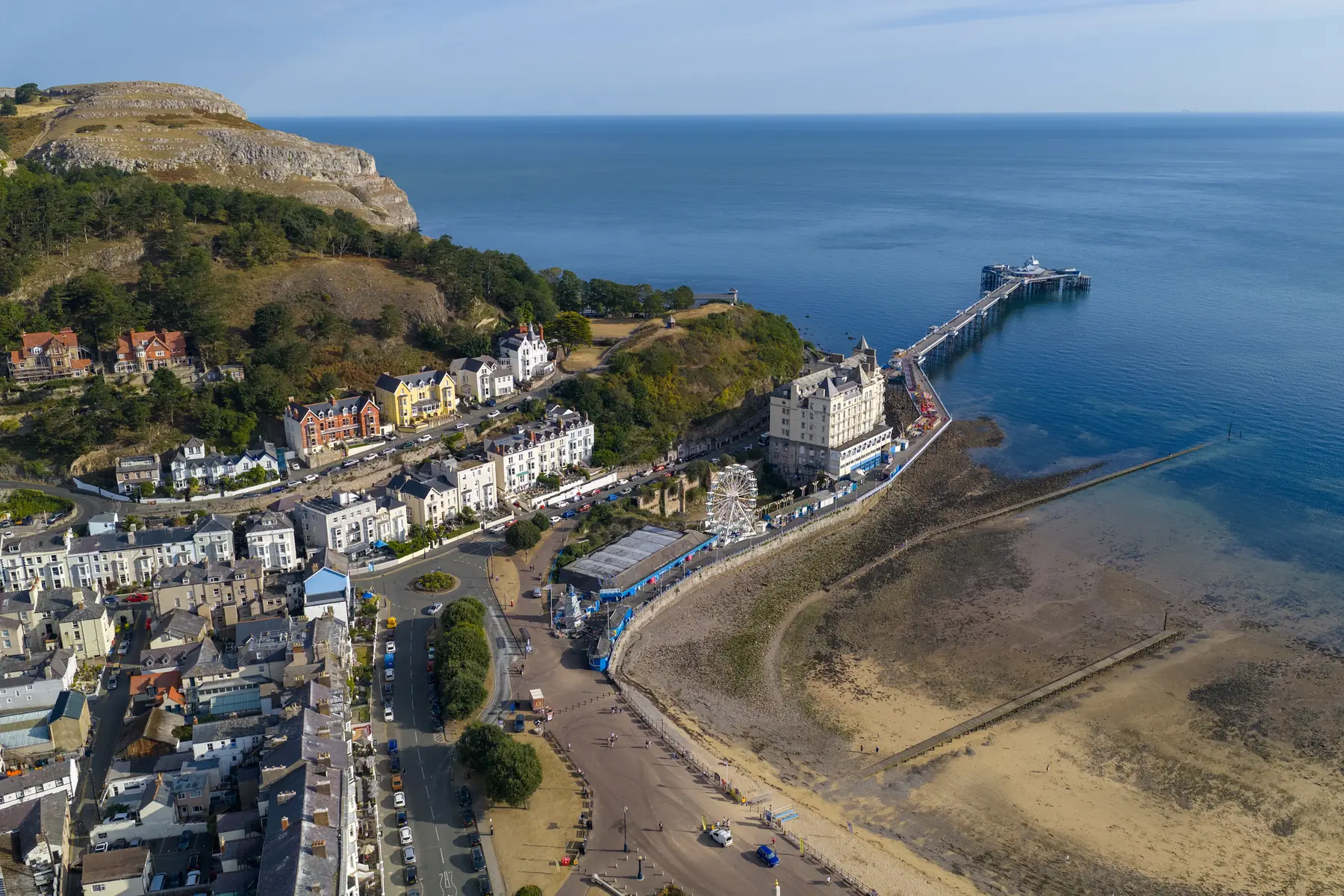
Llandudno feeds a lot of people. It is the largest seaside resort in North Wales, it has an unbroken crescent of Victorian hotels along the front, and it draws day trippers from Manchester, Liverpool and the whole of the north-west. The result is a town with a great deal of eating in it, most of it clustered in a few streets, and a wide spread of quality within a short walk.
The geography is simple. Mostyn Street and the streets running off it — Lloyd Street, Gloddaeth Street, Madoc Street — have most of the restaurants. Church Walks, at the foot of the Orme, has a smaller and generally better cluster. The promenade is hotels. And Conwy, five kilometres away, has the best cooking in the area.
Johnny Dough’s on Mostyn Street does wood-fired pizza and is the busiest restaurant in the town by a distance. Home Cookin’ a few doors along does exactly what the name says, at a high standard, and has built a substantial following. Forte’s is the long-established Llandudno restaurant and ice cream business — an institution rather than a discovery.
Dinos on Gloddaeth Street is an American-style diner and the family default. White Tower on Lloyd Street is Greek and has been there a long time. Carlo’s on Pleasant Street is the Italian. Mamma Rosa covers Sri Lankan cooking, which is not what most visitors expect to find in a Victorian resort and is all the better for it.
At the foot of the Great Orme, by the tramway station. Snooze is a small restaurant and wine bar that is consistently among the best-rated places in Llandudno, and the street has a handful of other independents. It is a quieter and more grown-up strip than Mostyn Street.
Llandudno’s seafront is hotels rather than restaurants — the promenade was laid out that way by the Mostyn estate and it has stayed that way.
The Imperial and St George’s are the two large Victorian landmarks, both with dining rooms open to non-residents, and afternoon tea at either is the traditional Llandudno indulgence. The Belmont, the Merrion, Cae Môr and The Clovelly are the smaller ones, several with good kitchens.
The advantage is a sea view; the disadvantage is that hotel dining in a resort town is variable, and the independents on Mostyn Street and Church Walks are usually the better bet for an ordinary dinner.
The promenade and the pier cover the seaside end thoroughly. Forte’s has been making ice cream here for generations. The pier has the arcade food; the beach huts and kiosks along the front do the rest.
For coffee, Mostyn Street and the lanes behind it have a growing set of independents, and the Mostyn gallery café on Vaughan Street is a good place to sit.
Penderyn — the Welsh whisky distillery — has a visitor centre and shop in Llandudno with tours and tastings. It is a short and worthwhile visit and the shop is the obvious place to buy something to take home.
Llandudno’s pubs are mostly in the streets behind the promenade rather than on it. The town has a lively season and a quiet winter, and there is a growing craft brewing scene along the North Wales coast.
Worth seeking out rather than assuming you will trip over it. Welsh lamb from the Carneddau behind the town, Conwy mussels dredged from the estuary in season, laverbread, bara brith and Welsh cakes all appear on menus if you look. Halen Môn sea salt comes from Anglesey, and North Wales now has several serious cheese producers.
The area’s food festivals — Conwy’s in particular — are the best place to find all of it in one afternoon.
Five kilometres away and worth the trip. Conwy has a walled town’s worth of pubs and restaurants in a very small area, several of them serving mussels from the estuary a few hundred metres away, and it is generally a step up on Llandudno for an evening out. It is ten minutes by car or train, which makes it an easy dinner destination.
Bodnant Welsh Food, in the Conwy valley, is a farm shop, dairy and restaurant that is a destination in its own right.
Booking. Summer weekends, the May bank holiday Victorian Extravaganza and the pantomime season at Venue Cymru all fill the town. Book then.
Out of season. Llandudno has a substantial resident population and does not close in winter, though the seafront kiosks and some seasonal places do.
Sundays. Roast lunch is taken seriously here and the better pubs and hotel dining rooms need booking.
Getting around. Everything above except Conwy is inside a fifteen-minute walk of the promenade.
Breakfast in your hotel — this is a town of Victorian hotels and most still do it properly. Mid-morning coffee at Mostyn’s gallery café or one of the independents behind Mostyn Street. Lunch at the summit of the Great Orme, which has a café with the best view in North Wales. Ice cream from Forte’s on the way back down. Dinner at Snooze on Church Walks or one of the Mostyn Street independents, booked. And a last drink in one of the pubs behind the promenade.
If you have a car or a train ticket, swap dinner for Conwy, ten minutes away, which has more good restaurants in a smaller area than Llandudno does.
Llandudno has three peaks: the May bank holiday, when the Victorian Extravaganza fills the town; July and August; and the pantomime and Christmas season at Venue Cymru, which brings a large regional audience. Book in all three.
Out of season the town does not close — the resident population and the conference trade at Venue Cymru keep it going — but the seafront kiosks, the tram, the cable car and some seasonal restaurants shut from late October.
Some of the best-placed eating in Llandudno is not in the town at all. The summit complex on the Great Orme has a café and bar with a view over Snowdonia, Anglesey and, on a clear day, the Isle of Man — it is worth going up for lunch alone. The Rest and Be Thankful café on Marine Drive, near the lighthouse on the far side of the headland, is the halfway stop for anyone walking the circuit.
Down at sea level, the pier has its own food, the promenade kiosks cover ice cream and chips, and the West Shore has a beach café that is a good deal quieter than anything on the North Shore.
A frank note. Llandudno feeds an enormous number of day trippers and coach parties, and a proportion of the eating on and immediately behind the promenade is priced and pitched accordingly. The town’s good independents are almost all one or two streets back — Church Walks, the upper end of Mostyn Street, and the lanes between — and they are noticeably better value.
The other reliable move is to eat in Conwy, ten minutes away by train or car, where the restaurants serve a resident and a walking market rather than a coach market, and where the mussels come out of the estuary at the bottom of the street.
Snooze on Church Walks for the cooking, Johnny Dough’s for pizza and atmosphere, Home Cookin’ for something more traditional done well.
The promenade hotels and the pier. Most of the independent restaurants are a street or two back.
Church Walks, the streets behind Mostyn Street, and Conwy for an evening out.
Yes, if you look for it — Welsh lamb, Conwy mussels in season, and Bodnant Welsh Food in the valley for produce.
In summer, over the May bank holiday and during the pantomime season, yes.